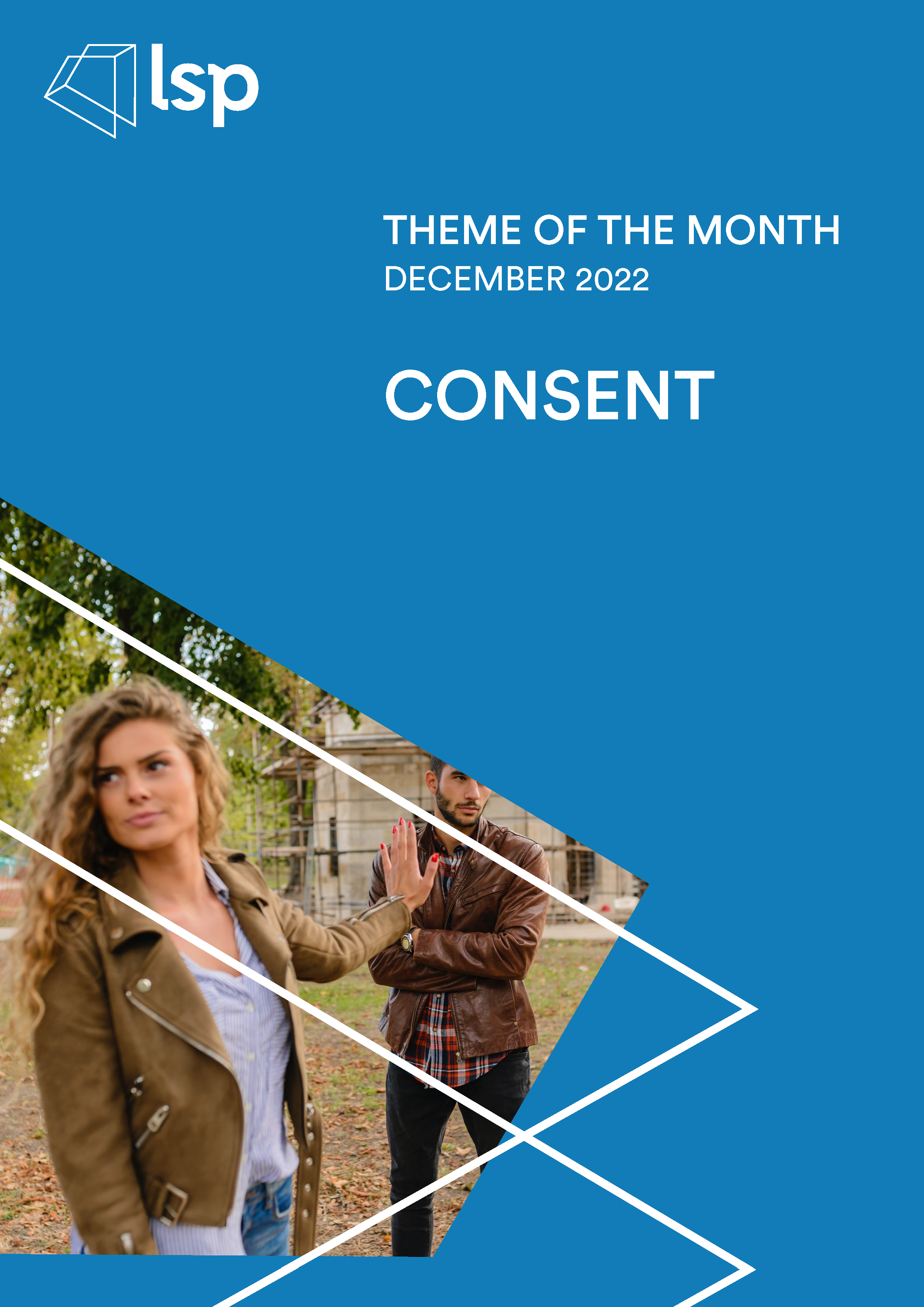
Theme of the Month - Consent
Theme of the Month: Consent Awareness
Understanding Consent, Choice and Personal Boundaries
This month’s Theme of the Month focuses on consent awareness, including personal choice, boundaries, communication, respect and safeguarding.
Understanding consent can help people recognise and communicate their own boundaries, respect the choices of others and identify situations where they may feel uncomfortable, pressured or unsafe.
It is also important to know that support is available if you are worried about yourself or someone else.
Consent Awareness: Quick Summary
Consent is about choice, freedom, understanding, communication and respect.
The key points to remember are:
Everyone has the right to make their own choices.
Personal boundaries should be recognised and respected.
Decisions should be made freely and without pressure.
Clear and respectful communication is important.
Personal boundaries can be different for each person.
Someone can change their mind or communicate a new boundary.
It is okay to ask for help if something makes you feel uncomfortable or unsafe.
Safeguarding support is available if you have a concern.
Understanding Choice and Personal Boundaries
Everyone has personal boundaries. These can relate to what they are comfortable with, how they interact with other people and the choices they make.
Important principles include:
Choice: People should be able to make their own decisions.
Freedom: A decision should be made freely, without pressure or coercion.
Understanding: People should understand the decision they are making.
Communication: Choices and boundaries should be communicated clearly.
Respect: If somebody communicates a boundary, it should be taken seriously and respected.
Understanding these principles can help create safer and more respectful interactions.
Why Is Consent Awareness Important?
Consent awareness is an important part of understanding respectful behaviour and safeguarding.
It can help people:
Understand the importance of personal choice.
Recognise and respect other people's boundaries.
Communicate their own boundaries clearly.
Understand that different people may have different boundaries.
Recognise situations that make them feel uncomfortable, pressured or unsafe.
Understand that it is okay to ask for help.
Know when safeguarding support may be appropriate.
Recognising and Respecting Other People's Boundaries
Personal boundaries are individual. What one person is comfortable with may be different from what someone else is comfortable with.
It is therefore important not to make assumptions about another person's choices or boundaries.
Respectful behaviour means listening, communicating clearly and taking people's choices seriously. If someone establishes a boundary or says that they are uncomfortable with something, this should be respected.
Communicating Your Own Boundaries
Understanding your own boundaries is just as important as recognising those of other people.
You should feel able to communicate when you are uncomfortable or do not want to take part in something. You can also change your mind.
If you feel pressured or find it difficult to communicate a boundary, you can speak to somebody you trust for advice and support.
Recognising Pressure or Uncomfortable Situations
A decision should be made freely. Pressure from another person can make it difficult for someone to feel able to make their own choice.
If something does not feel right, makes you uncomfortable or causes you to feel unsafe, you do not have to deal with the situation alone.
Speaking to a trusted person or a member of staff can help you understand what support is available.
What to Do If You Feel Uncomfortable or Unsafe
If you are worried about something that has happened to you or somebody else, asking for help is an important step.
You can speak to:
A member of the LSP Safeguarding Team
Your tutor
An appropriate member of staff
Another trusted person who can help you access support
You do not need to wait until a situation becomes more serious before raising a concern.
Consent Awareness and Safeguarding
Safeguarding is about supporting people's safety and wellbeing.
Understanding personal choice, boundaries and respectful communication can help people recognise situations where they or someone else may need additional support.
If you are unsure about a situation or have a safeguarding concern, it is okay to speak to someone and ask for help.
Key Takeaways
Remember:
Your choices and boundaries matter.
Other people's choices and boundaries should be respected.
Decisions should be made freely and without pressure.
Clear communication is important.
Different people can have different boundaries.
People can change their minds.
You can ask for help if something makes you feel uncomfortable or unsafe.
Safeguarding support is available.
Summary
LSP’s Theme of the Month: Consent Awareness focuses on helping people understand personal choice, boundaries, respectful communication and safeguarding.
Being aware of these principles can help people communicate their own boundaries, respect the choices of others and recognise when a situation may be uncomfortable or unsafe.
Most importantly, if you have a concern about yourself or somebody else, you do not have to deal with it alone. Support is available through LSP.