

What is Off the Job Training?
Off-the-job training in an apprenticeship is any learning that happens away from normal day to-day work tasks. It includes things like classroom lessons, workshops, online learning, or practical training in a simulated environment. The purpose is to give apprentices the knowledge, skills and behaviours needed to achieve their apprenticeship.
What activities count towards my Off the Job Training hours?
Off‑the‑job training covers any learning activity that helps you gain new knowledge, skills, or behaviours related to your apprenticeship, as long as it takes place during your normal working hours and is separate from your usual day‑to‑day duties
-
1-2-1 coaching/mentoring: Any time spent with a line manager, tutor, mentor
Written assignments: Time spent on completing assignment work for college.
Independent research and reading: Finding information through books, journals, the internet, policies, procedures that apply to your job or course.
Case study: Writing case studies and gathering facts, information or research.
Job shadowing: Working with a peer, mentor or manager whilst they complete a task then trying it yourself.
Manufacturer visits/demonstrations: Visits from an industry specialist where they are explaining new products or equipment to support your role.
Revision: Revision where this supports new knowledge.
Tasks: Tasks carried out connected to your learning.
Webinar/Tutorial/Video: Tutorial through IT System or watching YouTube clips in support of job role or learning.
Lessons/Group Teaching/Lectures: Teaching by tutor at college.
Peer Discussions: Talking to peers in regards to new ideas, projects or any break out rooms also team meetings to do with work or the course.
On-line Activity: Any research on the internet in relation to your apprenticeship standard to doing online courses applied to your job or the course.
-
On-boarding Activities: Any tasks completed as part of the enrolment and induction process.
Tasks Completed Before your Apprenticeship Start Date: You can not log hours for tasks you completed before you started your learning.
Reviews: Tripart reviews completed with your tutor, support coach or manager to discuss progress.
Observations or Assessments: Observations completed by your tutor, mentor or manager of any work that you have already learnt.
Day to Day Work Tasks: Daily, weekly or monthly tasks that are part of your normal work tasks, that have already been learnt and is not new to your knowledge or learning.
Maths or English: Any work completed at level 1 or 2, including work on Century Tech, exams or workbooks.
Initial Assessments: Completing the maths and English assessments at the start of the apprenticeship.
EPA Portfolio Building: Gathering the evidence for your End Point Assessment showcase or portfolio.
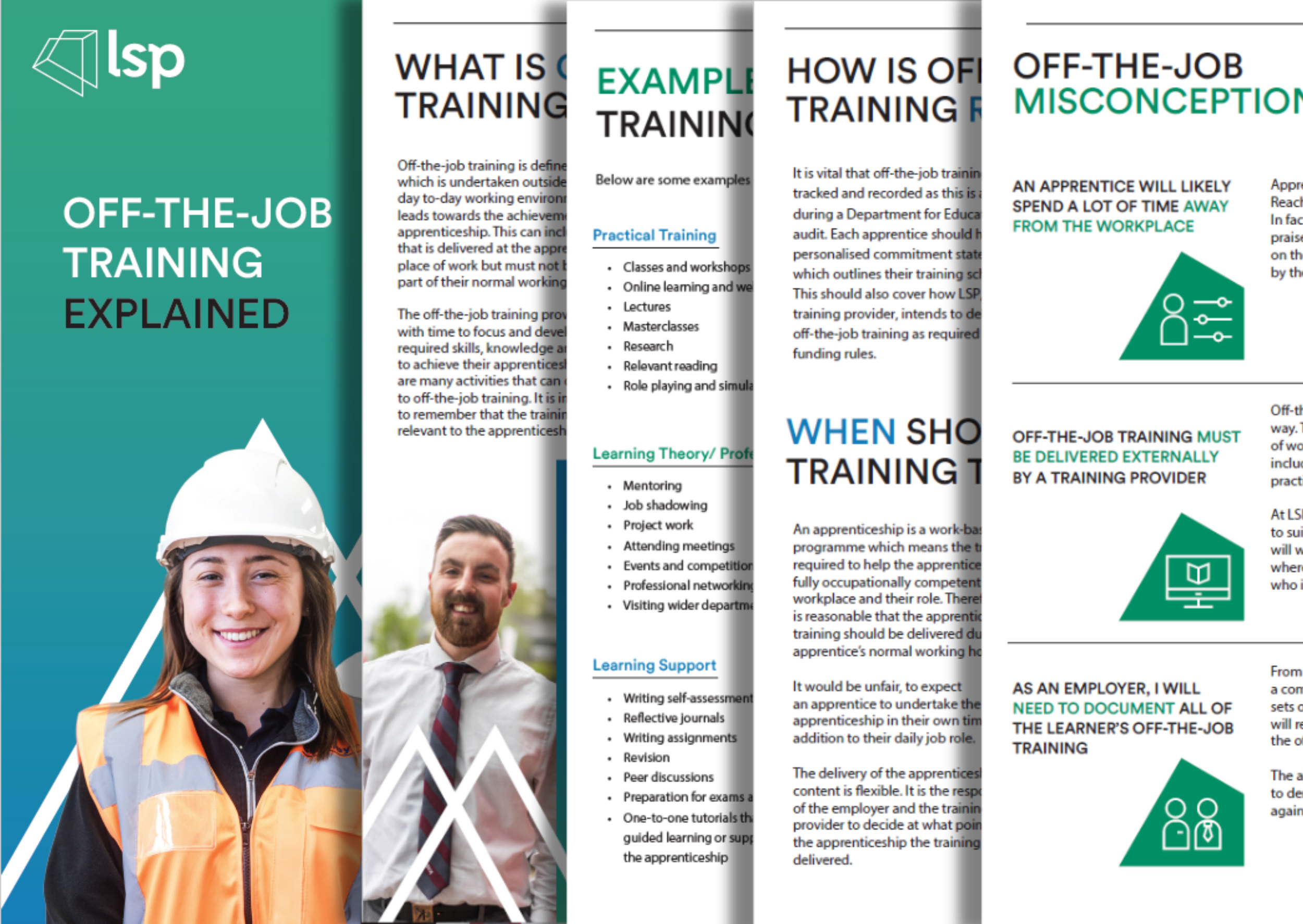
Off the Job Training Explained Booklet

FAQ
-
Apprentices have to log their off‑the‑job training hours because it proves they’re getting the full breadth of learning the apprenticeship is designed to deliver. The practical work alone doesn’t cover everything, so the logged hours show that the apprentice is also developing the theory, wider skills, and background knowledge that make them fully competent in the role.
-
No. It can take place in the workplace, online, at a training centre, or in any setting where structured learning is taking place.
-
You don’t have to record it at a fixed time, but the key is to log your off‑the‑job training regularly enough that your record stays accurate and up to date.
Most apprentices find it works best to record their hours:
On the same day they complete the activity
At least once a week so nothing gets forgotten
Always before progress reviews, so your Tutor/Support Coach can see your development clearly
The real goal is consistency. Logging little and often keeps your evidence strong and saves you from trying to remember everything months later.
-
As part of your apprenticeship agreement your employer is required to make sure you get the time to complete your off the job training hours. If things get hectic, speak to your manager and Tutor so they can help you plan it properly.
-
Yes. Many apprentices do extra learning because it helps them progress faster or prepare for their end‑point assessment.

Additional Support
Compliance Officer, Mandy, is dedicated to monitoring all off‑the‑job training to make sure your hours are accurate, compliant and aligned with apprenticeship requirements.
Email Mandy here.
What our learners have to say about Off the Job:
“For me, off-the-job learning helped me deepen my understanding by giving me time away from day-to-day tasks to focus on theory, new methods, and wider industry practices. It also strengthens the knowledge that I bring back to the workplace, helping me apply these skills more confidently and effectively. In lessons, it supports structured learning, linking classroom teaching with real work situations so myself and other apprentices can connect theory to practice and develop a more rounded skill set.” - Tom
“OTJ represents a crucial bridge between theory learning and practical application in my apprenticeship journey. It provides structured opportunities to expand my knowledge beyond my immediate role, encouraging me to actively seek out new experiences and engage with different departments and processes. This approach not only helps me meet the required hours but genuinely enhances my understanding of how my role fits into the broader context of my team and my apprenticeship/ qualification. Within my OTJ hours, I have completed site visits, participated in company wide projects, completed internal and external presentations and have had the opportunity to pass my knowledge down and mentor others!” - Aniksha